You spray in the morning, you smell excellent for forty minutes, and by the time anyone who matters is in the room the fragrance has quietly left. This is the most common complaint in perfumery, and in most cases the bottle is not the problem. The application is.
Fragrance longevity is governed by a small set of physical variables — skin moisture, temperature, friction, air exposure and where on the body you place the liquid. Control those and the same bottle that used to fade before lunch will carry you into the evening. Here are nine rules, ordered roughly by how much difference each one makes.
Rule 1: Apply to skin that is still slightly damp
This is the highest-impact change most people can make, and it costs nothing. Fragrance oils bind far more effectively to hydrated skin. Dry skin has nothing to hold the molecules, so they evaporate off the surface almost immediately.
Apply straight after a shower while your skin still holds moisture, ideally after an unscented moisturiser. Men with naturally dry skin often assume they simply cannot wear fragrance well. In reality they are wearing it on the worst possible surface.
Rule 2: Spray on pulse points — but the right ones
Pulse points sit where blood vessels run close to the surface, and the extra warmth there gently diffuses the scent through the day. The genuinely effective ones are the sides of the neck, the base of the throat, behind the ears, the inner elbows and the wrists.
Neck and throat matter most, because scent rises. A fragrance applied only at the wrists spends the day travelling away from everyone's nose, including your own.
Rule 3: Never rub your wrists together
Almost everyone does this, and it actively damages the fragrance. Rubbing generates friction and heat that shatters the delicate top notes before they have opened, and it forces the composition to jump prematurely to its base.
The correct method is to spray and let it dry undisturbed. A fragrance is built as a sequence — top notes, then heart, then base — and rubbing collapses that sequence into a muddle.
Rule 4: Get the distance right
Hold the bottle roughly fifteen to twenty centimetres from the skin. Closer than that and you deposit a concentrated wet patch that evaporates unevenly. Much further and most of the spray lands in the air rather than on you.
Three to four sprays is the correct amount for an eau de parfum on most men. More is not stronger — past a certain point you simply stop being able to smell it yourself while everyone around you smells it very clearly indeed.
Rule 5: Spray clothing as well as skin
Fabric holds fragrance dramatically longer than skin does, because it has no body heat driving evaporation and no natural oils altering the composition. A light spray on a cotton shirt or the inside of a jacket can still be detectable the following day.
Use restraint on light-coloured or delicate fabrics, where oils can mark. Cotton handles fragrance well, which is one small advantage of a wardrobe built around it — see our guide to summer fabrics for the fuller picture.
Rule 6: Layer, do not just spray
Layering means building the scent across more than one product so it has more surface area and more staying power. In practice that is an unscented moisturiser as the base, the fragrance itself, and optionally a light second application to clothing.
You can also layer two fragrances, though this needs a light hand. The reliable approach is a fresh, citrus-led scent as the base and a warmer, sweeter one applied more sparingly on top. Two heavy fragrances together compete rather than combine.
Rule 7: Store bottles properly — heat is the enemy
Heat, light and temperature swings degrade fragrance oils. A bathroom shelf is the single worst place to keep a bottle, because the daily shower cycle puts it through exactly the humidity and temperature changes that break a composition down. This matters even more in a hot climate.
Store bottles upright, in a drawer or cupboard, away from windows and radiators, ideally in their box. Kept properly, a sealed bottle stays in good condition for years. Left on a sunny shelf, it can noticeably deteriorate in a single summer.
Rule 8: Match concentration and season to the occasion
Concentration determines how much perfume oil is in the mix and therefore how long it lasts. Eau de parfum typically sits around fifteen to twenty per cent and holds for six to eight hours. Eau de toilette sits lower and fades faster by design.
Heat also amplifies projection. A sweet, resinous scent that is beautifully judged in December can become overwhelming in August. Our guide to fragrance families covers which compositions suit which conditions.
Rule 9: Understand that skin chemistry varies
The same fragrance genuinely does perform differently on different people. Skin pH, natural oil production and diet all alter how a composition develops. Oily skin holds fragrance longer; dry skin needs the moisturiser step far more.
This is why a recommendation from a friend is only ever a starting point. Test on your own skin and give it a full day before deciding — what a fragrance smells like in the first ten minutes is rarely what you will actually be wearing.
Recommended by SIGMAN
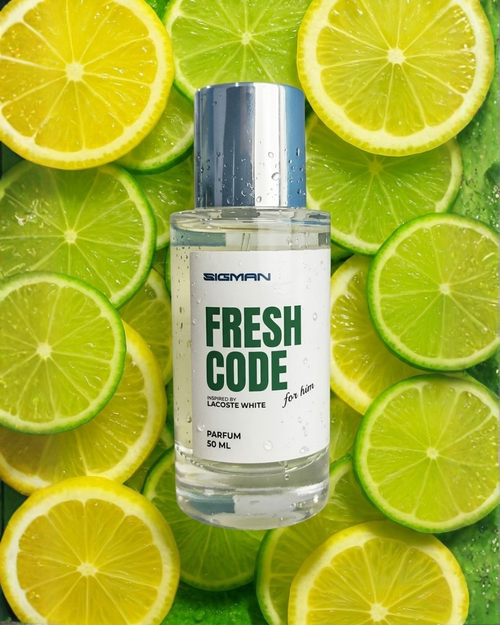
Every SIGMAN fragrance is built at eau de parfum concentration in a 50ml bottle, so the rules above have real material to work with. A few starting points depending on what you want:
- Golden Bond — warm spice over smooth vanilla. Excellent longevity, best from late afternoon onward.
- Salt Power — grapefruit and marine accord over ambergris. The one to reach for in real heat.
- Midnight — mint and lavender into honey, tobacco and tonka. A serious evening fragrance.
- SIGMA — oud, incense and amber. Deep, dark, and the longest-lasting in the range.
If you are still deciding, Build Your Perfume Set lets you choose any two fragrances at a reduced price — the most sensible way to test how different compositions behave on your own skin. Browse the full Fragrance Collection for the complete range.
Final word
Longevity is a technique, not a price tag. An inexpensive fragrance applied to moisturised skin at the neck, sprayed once onto cotton and stored away from heat will outlast an expensive one rubbed into dry wrists and left on a bathroom shelf. Fix the application first, and only then start questioning the bottle.
For help choosing what to wear in the first place, read our guide to choosing the perfect men's perfume.
Frequently asked questions
How long should a good perfume last on skin?
A well-made eau de parfum should remain detectable for six to eight hours on properly moisturised skin, and considerably longer on fabric. Anything under three hours usually points to a low concentration or a dry-skin application problem rather than a poor fragrance.
Why can I no longer smell my own perfume after an hour?
This is olfactory adaptation — your nose stops registering a constant scent so it can detect new ones. It is a normal neurological response, not a sign the fragrance has faded. People around you can almost certainly still smell it. Resist the urge to reapply on this basis alone.
Does spraying perfume on clothes damage them?
On cotton and most everyday fabrics, no. Be more careful with silk, very light colours and delicate materials, where the oils can leave a mark. Spray from a greater distance onto the inside of a garment if you are unsure.
Is it better to spray perfume on the neck or the wrists?
The neck. Scent rises, so fragrance applied at the neck and throat travels toward the people you are speaking with. Wrists are useful as a secondary point but are a poor primary one, and they are also where most people ruin the composition by rubbing.
How many sprays of perfume is too many?
Three to four sprays of an eau de parfum is right for most men in most settings. Six or more is generally too much in enclosed spaces — and because of olfactory adaptation you will not be able to tell, which is exactly why the rule matters.
Does perfume expire?
Yes, though slowly. A sealed bottle kept away from heat and light will stay in good condition for three to five years or more. Signs of degradation are a darkened colour, a noticeably sharper or sour opening, and top notes that have flattened out.